
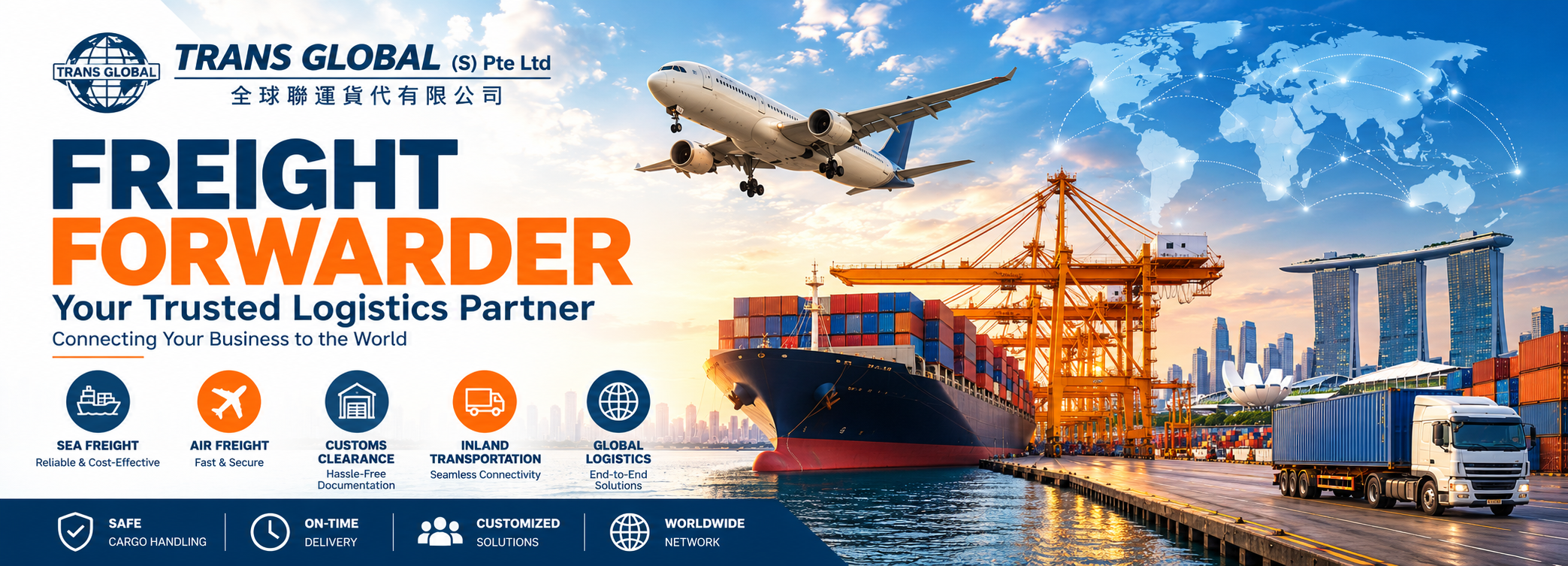
International shipping involves much more than moving cargo from one location to another. Businesses must coordinate transportation, documentation, customs procedures, cargo handling, delivery schedules, and sometimes warehousing or project logistics. This is where a freight forwarder plays an important role.
A freight forwarder acts as a logistics coordinator between the shipper and transportation providers. Rather than necessarily owning the ships, aircraft, or trucks used to move cargo, a freight forwarder arranges the appropriate transportation and manages the processes required to move goods from origin to destination.
For businesses importing or exporting through Singapore, working with an experienced freight forwarder in Singapore can simplify international shipping, improve supply-chain visibility, and help reduce avoidable delays.
Singapore is a major international logistics hub, connecting businesses across Asia and global markets through established sea, air, and land transportation networks. Trans Global (S) Pte Ltd, established in 2003, provides international freight forwarding, total logistics, land transportation, and project/oversized cargo solutions.
What Is a Freight Forwarder?
A freight forwarder is a logistics company or specialist that coordinates the transportation of goods on behalf of businesses or individuals.
A typical freight forwarder may coordinate:
- Air freight
- Ocean freight
- Road transportation
- Cargo consolidation
- Customs clearance
- Shipping documentation
- Warehousing
- Cargo insurance
- Door-to-door delivery
- Port-to-port transportation
- Airport-to-airport transportation
- Project cargo logistics
- Oversized and heavy cargo handling
The exact services depend on the freight forwarder and the shipment requirements.
A freight forwarder essentially helps connect the different parts of the logistics chain. Instead of a business having to coordinate separately with airlines, shipping lines, trucking companies, customs agents, warehouses, and delivery providers, a freight forwarder can manage and coordinate these activities as part of an integrated logistics solution.
Freight Forwarder vs. Carrier
One common question is:
Is a freight forwarder the same as a shipping carrier?
No.
A carrier physically transports the cargo. For example, an airline may transport cargo by aircraft, while an ocean carrier transports containers by vessel.
A freight forwarder, on the other hand, arranges and coordinates transportation and related logistics services. Depending on the shipment, the forwarder may work with airlines, ocean carriers, trucking companies, warehouses, customs specialists, and other logistics partners.
This coordination can be particularly valuable for international shipments involving multiple transportation modes.
Why Is Singapore Important for Freight Forwarding?
Singapore is strategically positioned in Southeast Asia and has developed into a major international trade and logistics hub.
Its location, transportation infrastructure, port facilities, airport connectivity, and regional trade links make Singapore an important gateway for businesses moving cargo between Asia and international markets.
For businesses shipping through Singapore, a professional freight forwarding company in Singapore can help coordinate the different stages of international transportation.
Trans Global describes its operations as covering international freight forwarding, total logistics, project cargo, ocean freight, air freight, and land transportation. The company supports cargo movement from pickup through delivery to the buyer’s door or site.
Why Do Businesses Need a Freight Forwarder in Singapore?
Choosing a freight forwarder can provide several practical advantages, particularly for businesses handling international shipments regularly.
1. Expertise in International Shipping
International freight involves different regulations, documentation requirements, transportation options, and customs procedures.
A freight forwarder can help coordinate these requirements and identify the most suitable shipping method based on the cargo, destination, timeline, and budget.
This can be particularly useful when a shipment involves multiple countries or transportation modes.
2. Better Transportation Planning
The best transportation method depends on several factors, including:
- Cargo dimensions
- Cargo weight
- Destination
- Required delivery date
- Shipment value
- Cargo type
- Budget
- Customs requirements
- Urgency
For example, air freight may be appropriate for urgent or high-value shipments, while ocean freight may be more economical for larger or heavier cargo.
Trans Global provides both air and ocean freight solutions and can coordinate transportation according to shipment requirements.
3. Customs Clearance Support
Customs documentation is one of the most important aspects of international shipping.
Incorrect or incomplete documentation can result in delays, additional costs, or shipment holds.
A freight forwarder can coordinate documentation and customs procedures, including relevant import and export documentation, tariff classification, permits, and other requirements depending on the shipment.
Trans Global’s published logistics services include customs brokerage and clearance support, including documentation preparation, tariff classification, and handling of restricted goods and compliance requirements.
4. Access to Multiple Transportation Options
A business may need more than one mode of transportation.
For example:
Factory → Truck → Port → Ocean Vessel → Port → Truck → Customer
Alternatively:
Supplier → Truck → Airport → Aircraft → Destination Airport → Truck → Customer
A freight forwarder can coordinate these transportation stages as part of a broader logistics plan.
5. Potential Cost Efficiency
Freight forwarding companies work with transportation providers and logistics partners across different routes.
Depending on shipment volume and requirements, a forwarder may be able to consolidate cargo or recommend more cost-effective transportation options.
For smaller shipments, consolidation can be particularly useful because businesses may not need to book an entire container or dedicated transportation service.
Trans Global provides both FCL and LCL ocean freight solutions and consolidation services as part of its logistics offering.
What Services Does a Freight Forwarder Provide?
A professional freight forwarder can provide a range of services depending on the customer’s logistics requirements.
1. Air Freight
Air freight is commonly selected when speed is an important consideration.
It can be suitable for:
- Urgent commercial shipments
- High-value goods
- Time-sensitive components
- Electronics
- Pharmaceuticals
- Perishable products
- Documents
- Smaller shipments
Trans Global offers international air freight, consolidated shipments, express options, door-to-door services, airport-to-airport transportation, customs clearance, and cargo tracking.
When Should You Choose Air Freight?
Air freight can be appropriate when:
- Delivery speed is critical
- The shipment has a relatively high value
- The cargo is time-sensitive
- Inventory shortages need to be addressed quickly
- The shipment is relatively small or lightweight
The main trade-off is that air freight generally costs more than ocean freight for comparable cargo volumes.
2. Ocean Freight
Ocean freight is widely used for large-volume and heavy international shipments.
It can support:
- Full Container Load (FCL)
- Less than Container Load (LCL)
- Port-to-port shipping
- Door-to-port transportation
- Door-to-door delivery
- Bulk commercial cargo
- Industrial equipment
- Oversized shipments
Trans Global provides ocean freight solutions and FCL/LCL options for businesses with different shipment volumes.
When Should You Choose Ocean Freight?
Ocean freight can be suitable when:
- Cargo volume is large
- The shipment is heavy
- Delivery time is less urgent
- Cost efficiency is important
- The shipment requires containerized transportation
For many businesses, the choice between air and sea freight comes down to the balance between speed, cost, cargo characteristics, and delivery requirements.
3. Road Freight and Land Transportation
Road transportation plays an important role in first-mile and last-mile logistics.
It can connect:
- Warehouses to ports
- Factories to airports
- Ports to distribution centers
- Airports to customer locations
- Singapore to regional destinations
Trans Global lists road/truck transportation among its logistics services and provides land transportation as part of its broader logistics offering.
4. Customs Clearance
Customs clearance involves ensuring that shipments meet applicable import and export requirements.
Depending on the shipment, documentation may include:
- Commercial invoices
- Packing lists
- Shipping documents
- Air waybills
- Import/export declarations
- Certificates
- Permits
- Other regulatory documents
A freight forwarder can help coordinate the documentation and clearance process.
5. Warehousing and Distribution
Some businesses require storage between transportation stages.
Warehousing can support:
- Temporary storage
- Inventory management
- Cargo consolidation
- Distribution
- Order preparation
- Last-mile delivery
An integrated logistics provider can coordinate warehousing with transportation rather than treating storage as a separate process.
6. Door-to-Door Freight Forwarding
Door-to-door logistics means the freight forwarder coordinates the shipment from the pickup location through to the final delivery point.
For example:
Supplier → Pickup → Export Customs → International Freight → Import Customs → Local Delivery → Customer
This can reduce the number of logistics providers that a business has to coordinate independently.
Trans Global promotes door-to-door, port-to-port, and airport-to-airport service options.
7. Cargo Insurance
International shipments can face risks during transportation, handling, storage, loading, unloading, or other stages of the logistics process.
Cargo insurance can provide financial protection depending on the policy and circumstances.
Businesses should discuss insurance requirements with their freight forwarder before shipping valuable or sensitive cargo.
8. Project Cargo and Oversized Cargo
Not every shipment fits into a standard container or conventional transportation process.
Large industrial equipment, machinery, plant components, and other oversized cargo may require specialized planning.
Trans Global specifically identifies project cargo and oversized cargo handling as areas of specialization.
Project logistics may involve:
- Route planning
- Heavy transportation
- Specialized lifting
- Port coordination
- Equipment handling
- Customs documentation
- Multiple transport modes
- Delivery to a project site
For complex shipments, choosing a freight forwarder with relevant project cargo experience can be particularly important.
How Does Freight Forwarding Work?
A typical freight forwarding process can be divided into several stages.
Step 1: Shipment Assessment
The freight forwarder first reviews the shipment requirements.
Important information may include:
- Origin
- Destination
- Cargo type
- Weight
- Dimensions
- Quantity
- Value
- Required delivery date
- Packaging
- Special handling requirements
Step 2: Transportation Planning
The forwarder evaluates the available transportation options.
This could involve:
- Air freight
- Ocean freight
- Road freight
- Multimodal transportation
The objective is to develop a practical solution based on cost, transit requirements, cargo characteristics, and destination.
Step 3: Quotation and Booking
Once the logistics plan is established, the customer receives a quotation.
After approval, the freight forwarder coordinates the booking with the relevant transportation provider.
Step 4: Pickup and Cargo Handling
The shipment is collected from the supplier, warehouse, factory, or other agreed location.
Depending on the cargo, the forwarder may coordinate:
- Packaging
- Labeling
- Palletization
- Loading
- Cargo inspection
- Documentation
Step 5: Export Documentation and Customs
The required documentation is prepared and submitted.
The shipment then proceeds through the relevant export procedures.
Step 6: International Transportation
The cargo moves by the selected transportation method.
This may be:
- Air
- Ocean
- Road
- Multimodal
Step 7: Import Customs Clearance
At the destination, the shipment goes through the relevant customs process.
Documentation, permits, duties, taxes, and other requirements depend on the destination country and type of cargo.
Step 8: Final Delivery
After clearance, the cargo can be delivered to:
- Warehouse
- Distribution center
- Business premises
- Construction site
- Factory
- Customer address
How Much Does Freight Forwarding Cost in Singapore?
There is no single standard freight forwarding price.
The final cost depends on several factors, including:
- Origin
- Destination
- Cargo weight
- Cargo dimensions
- Volume
- Shipping method
- Container type
- Delivery requirements
- Customs requirements
- Insurance
- Special handling
- Fuel and carrier charges
- Port or airport charges
For example, shipping a small urgent package by air will have a very different cost structure from transporting a full container of machinery by sea.
Trans Global states that shipping costs are affected by factors such as cargo weight, dimensions, and destination and recommends requesting a quotation for specific shipment requirements.
Air Freight vs. Sea Freight: Which Is Better?
There is no universally “best” freight method. The appropriate choice depends on the shipment.
| Factor | Air Freight | Sea Freight |
|---|---|---|
| Speed | Faster | Generally slower |
| Cost | Usually higher | Generally lower for large volumes |
| Cargo | Urgent/high-value goods | Bulk/heavy cargo |
| Shipment size | Often suitable for smaller shipments | Suitable for large shipments |
| Frequency | Frequent flight schedules | Vessel schedules |
| Best for | Time-sensitive cargo | Cost-sensitive bulk cargo |
Trans Global’s published guidance similarly describes air freight as a faster option and sea freight as generally more economical for larger and heavier shipments.
What Should You Look for in a Freight Forwarder in Singapore?
Choosing a freight forwarder is an important business decision.
Here are several factors to consider.
1. Industry Experience
Look for a company with demonstrated experience handling the type of cargo you ship.
Different industries can have very different requirements.
2. Range of Services
A freight forwarder should ideally provide the services your supply chain requires.
These may include:
- Air freight
- Ocean freight
- Road freight
- Customs clearance
- Warehousing
- Project cargo
- Cargo insurance
- Door-to-door delivery
3. Global Network
International logistics depends on reliable connections between origin and destination.
A freight forwarder’s network of carriers, agents, trucking companies, warehouses, and logistics partners can affect routing options and service availability.
4. Customs Knowledge
Customs expertise is particularly important for international shipments.
A forwarder should understand the documentation and compliance requirements applicable to your shipment.
5. Shipment Visibility
Tracking and communication can help businesses understand where their cargo is during transportation.
Modern freight forwarding services may provide tracking updates and shipment-status visibility. Trans Global’s published air freight services include tracking and visibility as part of its logistics process.
6. Specialized Cargo Capability
If you transport machinery, oversized cargo, project equipment, or sensitive goods, verify that the freight forwarder has experience handling these shipments.
This is particularly relevant for project cargo and industrial logistics.
Why Choose Trans Global as a Freight Forwarder in Singapore?
Trans Global (S) Pte Ltd has been operating since 2003 and describes its expertise across international freight forwarding, total logistics, land transportation, removals, shipping and postage services, and project cargo handling.
The company’s current website lists services including:
- Road / Truck
- Ocean Freight
- Air Freight
- International Freight Forwarding
- Logistics Solutions
- Project Cargo
- Oversized Cargo Handling.
International Freight Forwarding
Trans Global coordinates international cargo movement using transportation networks and logistics partners.
Its freight forwarding services are designed to support businesses moving cargo across borders.
Air Freight
Trans Global provides air freight options including international shipments, consolidated cargo, door-to-door transportation, airport-to-airport services, customs clearance, and shipment tracking.
Ocean Freight
Ocean freight solutions can support both FCL and LCL shipments and are suitable for businesses moving larger volumes or heavier cargo.
Land Transportation
Road transportation can connect cargo between factories, warehouses, ports, airports, and final destinations.
Project and Oversized Cargo
Trans Global specifically highlights project and oversized cargo as an area of expertise, making this relevant for businesses moving industrial equipment and complex shipments.
Tailored Logistics Solutions
Different shipments require different logistics strategies. A customized approach can help businesses balance cost, speed, cargo requirements, and delivery expectations.
What Types of Businesses Can Use a Freight Forwarder?
Freight forwarding can benefit businesses across many industries.
Manufacturing
Manufacturers may need to move raw materials, components, machinery, and finished products across international borders.
E-commerce
Online retailers and distributors may require reliable international transportation and final-mile delivery.
Electronics
Electronics can be high-value and time-sensitive, making transportation planning and cargo security important.
Pharmaceuticals and Healthcare
Temperature-sensitive and regulated shipments require appropriate handling and documentation.
Construction
Construction businesses may need to move equipment, materials, machinery, and project cargo.
Engineering and Industrial Companies
Industrial businesses may transport oversized machinery, plant components, generators, pumps, and other specialized equipment.
Importers and Exporters
Businesses regularly importing or exporting goods can benefit from an experienced freight forwarding partner that manages recurring logistics requirements.
Freight Forwarding for Small and Large Businesses
Freight forwarding is not limited to multinational corporations.
Small and medium-sized businesses may also use freight forwarders when they need to:
- Import products
- Export goods
- Ship internationally
- Manage customs procedures
- Consolidate cargo
- Reduce logistics complexity
- Coordinate door-to-door transportation
Larger businesses may require more complex services such as:
- Multi-country supply chains
- Dedicated account management
- Project logistics
- FCL shipping
- Oversized cargo transportation
- Warehousing
- Distribution
- Multimodal transportation
The right logistics model depends on the business’s shipping volume and requirements.
Common Freight Forwarding Mistakes to Avoid
Businesses can reduce logistics problems by planning ahead.
Mistake 1: Choosing Only on Price
The cheapest quote may not always represent the best overall value.
Compare:
- Transit time
- Service scope
- Customs support
- Tracking
- Insurance
- Delivery options
- Handling requirements
Mistake 2: Providing Incorrect Cargo Information
Incorrect weight or dimensions can result in inaccurate quotations and operational problems.
Always provide accurate cargo information.
Mistake 3: Ignoring Customs Requirements
Customs requirements should be considered before cargo is shipped, not after it reaches the destination.
Mistake 4: Choosing the Wrong Transportation Mode
An urgent shipment sent by sea may create unnecessary delays, while non-urgent bulk cargo sent by air may create unnecessary costs.
Mistake 5: Not Planning for Special Cargo
Oversized, hazardous, fragile, temperature-sensitive, or high-value cargo may require specialized handling.
Always disclose special requirements to your freight forwarder before booking.
FAQ About Freight Forwarders in Singapore
What does a freight forwarder do?
A freight forwarder coordinates the movement of cargo between locations by arranging transportation and related logistics services. Depending on the shipment, this can include air freight, sea freight, road transportation, customs clearance, documentation, warehousing, cargo insurance, and final delivery.
Is a freight forwarder the same as a shipping company?
No. A carrier physically transports cargo, while a freight forwarder coordinates transportation and related logistics services. A freight forwarder may work with multiple carriers to arrange a shipment.
What services does a freight forwarder provide in Singapore?
Services can include air freight, ocean freight, road transportation, customs clearance, warehousing, cargo insurance, door-to-door delivery, project cargo, and oversized cargo logistics.
Is air freight faster than sea freight?
Generally, yes. Air freight is typically selected when speed is a priority, while sea freight is generally more economical for large or heavy shipments. The appropriate option depends on the cargo and delivery requirements.
Is sea freight cheaper than air freight?
For many large-volume shipments, sea freight is generally more cost-effective than air freight. However, actual costs depend on cargo weight, volume, origin, destination, transportation requirements, and other charges.
How much does a freight forwarder cost in Singapore?
There is no fixed price. Freight forwarding costs depend on factors such as cargo dimensions, weight, destination, shipping method, customs requirements, handling, and delivery services.
Can a freight forwarder handle customs clearance?
Yes. Many freight forwarders provide customs clearance and documentation support as part of their logistics services. Trans Global provides customs-related services as part of its freight forwarding and logistics offering.
Can freight forwarders arrange door-to-door delivery?
Yes. Depending on the service, a freight forwarder can coordinate transportation from the pickup location to the final delivery address. Trans Global offers door-to-door options alongside port-to-port and airport-to-airport services.
Can a freight forwarder handle oversized cargo?
Some freight forwarders specialize in project and oversized cargo. Businesses should confirm the provider’s experience and capabilities before booking specialized shipments.
How do I choose the right freight forwarder in Singapore?
Consider the company’s experience, service range, carrier and logistics network, customs expertise, tracking capabilities, customer support, specialized cargo capabilities, and overall service reliability. Request a detailed quotation based on your actual shipment requirements.
Freight Forwarding in Singapore: The Bottom Line
A freight forwarder can simplify international shipping by coordinating transportation, documentation, customs procedures, cargo handling, and delivery.
For businesses operating through Singapore, the right freight forwarding partner can help create a more efficient logistics process while giving the business greater visibility and control over international shipments.
The most suitable freight forwarding solution depends on your:
- Cargo type
- Cargo weight
- Cargo dimensions
- Origin
- Destination
- Delivery deadline
- Budget
- Customs requirements
- Handling requirements
Trans Global (S) Pte Ltd. provides international freight forwarding and logistics services covering air freight, ocean freight, road transportation, project cargo, oversized cargo, customs support, and end-to-end logistics coordination.